
Cucurbituril-X
Cucurbituril Research Platform

Premium Cucurbituril Materials for Supramolecular Research

High-purity cucurbit[n]uril series and highly water-soluble modified cucurbituril products with custom synthesis and technical collaboration

Premium Cucurbituril Materials

Complete product line with high purity, exceeding industry standards

Research-Driven Platform

Focused on supramolecular materials, with deep insight into research needs

Custom Synthesis & Collaboration

Professional custom synthesis services. Technical collaboration available.

Cucurbituril Structure and Binding Mechanism

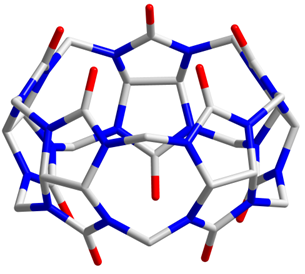
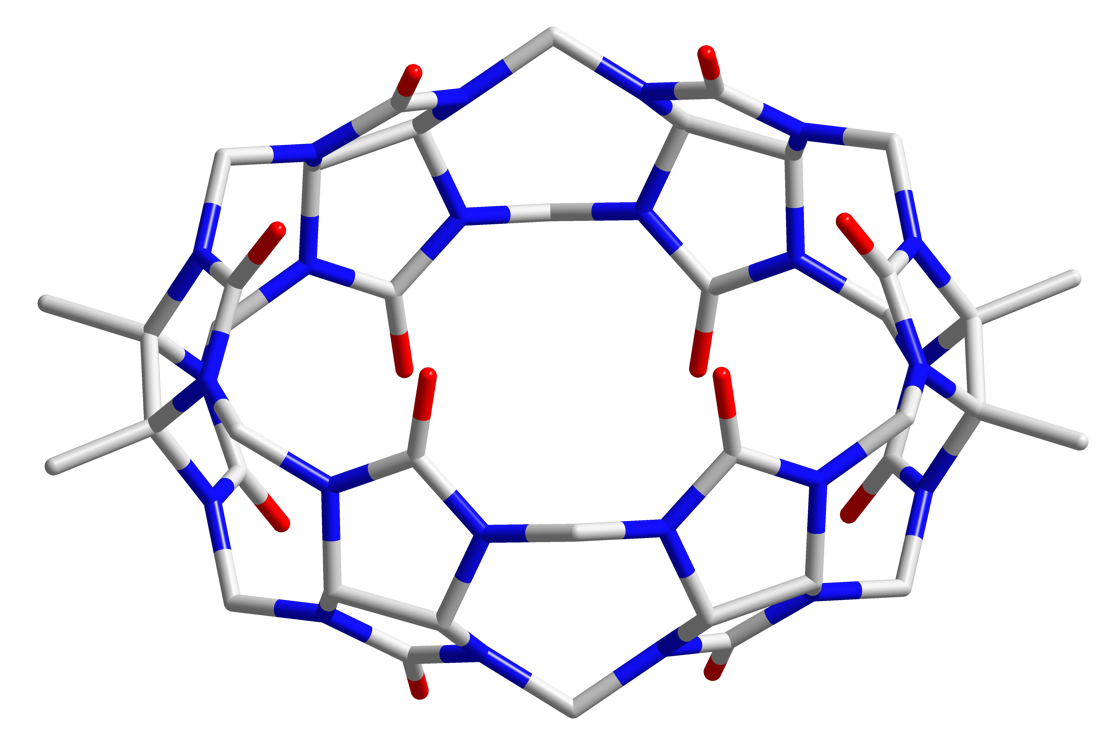
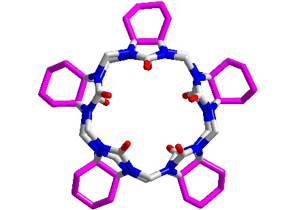
Cucurbit[n]urils are barrel-shaped macrocycles composed of glycoluril units linked by methylene bridges. They feature electron-rich, carbonyl-fringed portals at both rims. Their rigid cavity offers size selectivity, while the hydrophobic walls and ion–dipole interactions at the portals provide the driving force for binding. This combination gives cucurbit[n]urils a well-defined role in host–guest chemistry, drug delivery, sensing, and supramolecular materials.

Rigid glycoluril macrocycle

Cucurbit[n]urils are barrel-shaped macrocycles composed of n glycoluril units bridged by methylene groups, with the general formula (C6H6N4O2)n.. The framework is conformationally rigid, so size selectivity arises from geometric cavity–guest complementarity rather than induced fit.

Hydrophobic cavity drives complexation

The cavity wall is formed by glycoluril C–H groups and bridging methylenes, making it distinctly hydrophobic. In water, guest entry displaces high-energy cavity water, so the hydrophobic effect dominates the binding free energy.

Ion–dipole interaction at carbonyl portals

Each rim carries n carbonyl groups pointing into the portal. The partially negative oxygens provide strong ion–dipole attraction for cationic guests and hydrogen bonding to N–H / O–H donors—the defining feature that distinguishes cucurbiturils from other macrocycles.

High binding affinity

With well-matched guests, CB[7] achieves association constants of 10⁹–10¹² M⁻¹ with ferrocene and adamantylamine derivatives—orders of magnitude higher than typical cyclodextrin systems—ensuring complex stability even at low working concentrations.

Chemical and thermal stability

The cucurbituril backbone is stable against strong acids, common organic solvents, and heat. It withstands chromatography, catalytic reactions, and materials processing, and can be stored for long periods.

Biological System Compatibility

Numerous studies report low cytotoxicity for CB[7] in cell experiments, making it widely used for aqueous drug solubilization, controlled release, fluorescent probing, and biomolecular recognition. Compatibility should still be verified in each specific system.

50+
Served Research Institutions
13+
Product Variants
≥95%
Average Purity
24h
Quick Response